Is It Too Late to Start Retinol at 50?
The short answer
No. 50 is not too late. Skin stays responsive to retinoids at every age. Clinical trials in women in their 50s, 60s and beyond show clear improvement in fine wrinkles, texture and pigmentation. What changes at 50 is not whether retinol works. It is how you start.First, the names, because the words get used interchangeably and that confuses everyone. Retinol is the gentle form you can buy at any drugstore. Tretinoin is the stronger prescription version. Both belong to the same vitamin A family, called retinoids. This guide is about starting with retinol.
What the research actually shows
- In clinical research, women using tretinoin (the prescription-strength retinoid) saw fewer fine wrinkles, more even skin tone and smoother skin than women using a plain cream.
- The improvement lasts. In long-term research, skin held onto its gains even when women cut back how often they used it.
- Drugstore retinol is gentler and slower than the prescription version. But in a head-to-head study, it came close to the same results with far less irritation. At 50, that gentleness matters.
Why does it still work at 50? Retinol helps your skin replace old cells faster and make more collagen, the protein that keeps skin firm. Skin does this more slowly at 50 than at 30. That is exactly why a little help goes further now.
What strength should you start with?
How to start retinol at 50 without wrecking your skin barrier
Skin at 50 is typically thinner and drier than it was at 30, so the classic mistake is easier to make and more discouraging: starting strong and nightly, flaking for three weeks, and quitting. The protocol:
- Start low: 0.2–0.3% retinol. The strength is printed on the front of the bottle. A strength you can use comfortably every night beats a strong one you give up on.
- Two nights a week for the first two weeks. Pea-sized amount for the whole face, on completely dry skin (damp skin drives it deeper and stings).
- Buffer with moisturizer: after the retinol, or sandwich it (moisturizer, retinol, moisturizer) if your skin runs dry.
- Add a night every two weeks as tolerated. The ramp to nightly should take about eight weeks, not eight days.
- SPF 30+ every morning, non-negotiable. Retinoids make skin more sun-sensitive, and unprotected sun exposure is the very damage you’re treating.
- Expect a wobble around weeks 2–4. Mild flaking or dryness is adjustment, not allergy. Hold your frequency steady until it passes, then resume the ramp.
What results look like, and when
Retinol asks for patience, especially in the first month, when your skin is adjusting and nothing visible has changed yet.
And the honest scope: retinol will not lift sagging. Jowls, loose neck skin and deeper folds are structural, driven by fat, muscle and bone changes rather than the skin surface. Anyone promising a retinol “facelift” is selling. What it reliably improves is the skin itself: texture, tone, fine lines and radiance, at any age.
What if your skin is sensitive, or you already use other products?
Rosacea or eczema: patch-test at the jaw for a week, or ask a dermatologist about starting even lower. Already using exfoliating acids or vitamin C: don’t stack new actives the same nights you introduce retinol; alternate nights until you’re stable. And though less relevant at 50, for completeness: retinoids are skipped entirely in pregnancy.
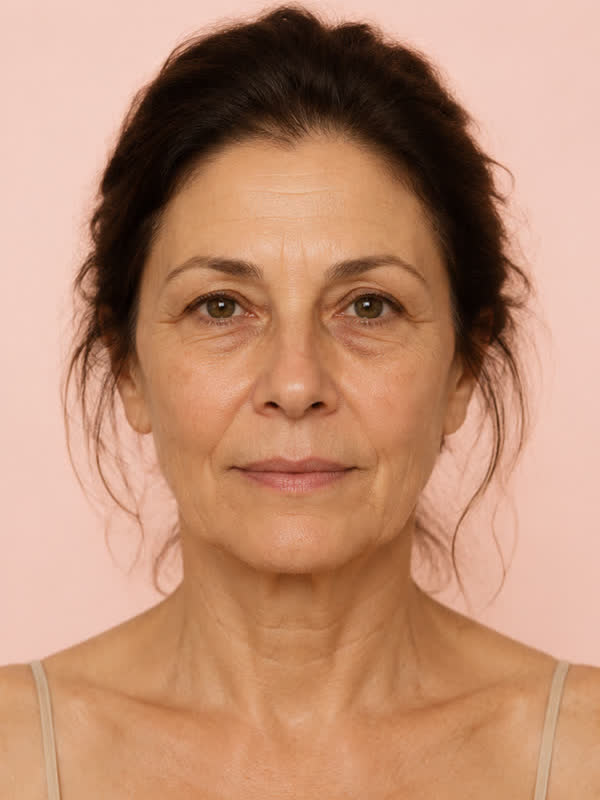 TODAY
TODAY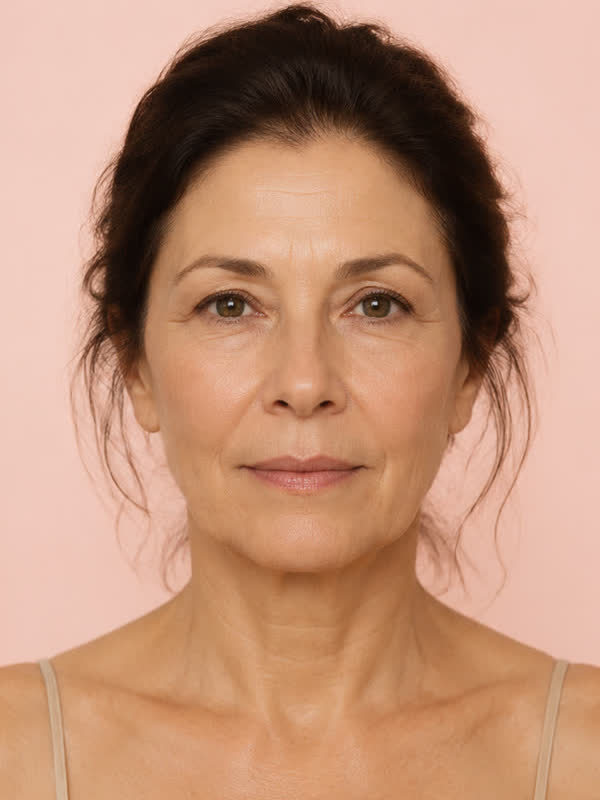 ATTAINABLE
The next step
Get Your Personalized Skincare Program
Revu starts with one photo. You get a program built for your face, not a generic routine: a realistic picture of what your skin can be, and a daily plan made just for you, one area at a time.
Download on theApp StoreFor iPhone · Made for women 40+
Frequently asked questions
Is 60 too late to start retinol?
No. The same trials included participants in their 60s and 70s with significant improvement. The gentle-start protocol matters even more.
Retinol or tretinoin at 50?
Tretinoin is stronger, faster, prescription-only, and more irritating. Split-face evidence suggests well-formulated retinol gets meaningfully close with less irritation. A reasonable path: master retinol first; discuss tretinoin with a dermatologist if you plateau after six months.
How long until I see results?
First visible changes typically land around weeks 8–12; fine-line improvement builds through month six. Photograph yourself monthly; mirrors hide gradual change.
Can I use retinol with vitamin C?
Yes. The classic pairing is vitamin C in the morning (under SPF) and retinol at night. Just don’t introduce both in the same fortnight.
What are the "retinol uglies"? Is the purge normal?
Yes, it is normal. In the first two to four weeks retinol can bring on flaking, dryness and the odd breakout while your skin adjusts. It passes. Hold your frequency steady, moisturize more, and do not add anything new until it settles.
Can I use retinol on my neck, chest and hands?
Yes, and at 50 you probably should. Neck, chest and hands show age early and are often forgotten. Use the same low-and-slow approach, ramp even more gently on the neck (the skin there is thinner), and give those areas SPF too.
Can I use retinol around my eyes?
Carefully, yes. Keep it to the orbital bone (the ridge you can feel), not the lids or lash line. Start one night a week there, buffered with eye cream or moisturizer. If it stings or flakes, pull back to the cheekbone line.
Will retinol make me look older at first?
No. The flaking phase can make skin look dry for a few weeks, which is temporary and surface-level. It is adjustment, not aging. By weeks 8 to 12 the direction reverses, and that is when most women see why they started.
Does retinol thin the skin?
The opposite. Over time it thickens skin and builds collagen. The flaking phase is temporary and only on the surface.
Is menopause the reason my skin changed so fast?
Very likely. Skin loses up to 30% of its collagen in the first five years after menopause, which is why the change feels sudden rather than gradual. Our guide to what menopause does to your skin covers what is happening and what helps first.