Why Does My Face Look Older After Weight Loss?
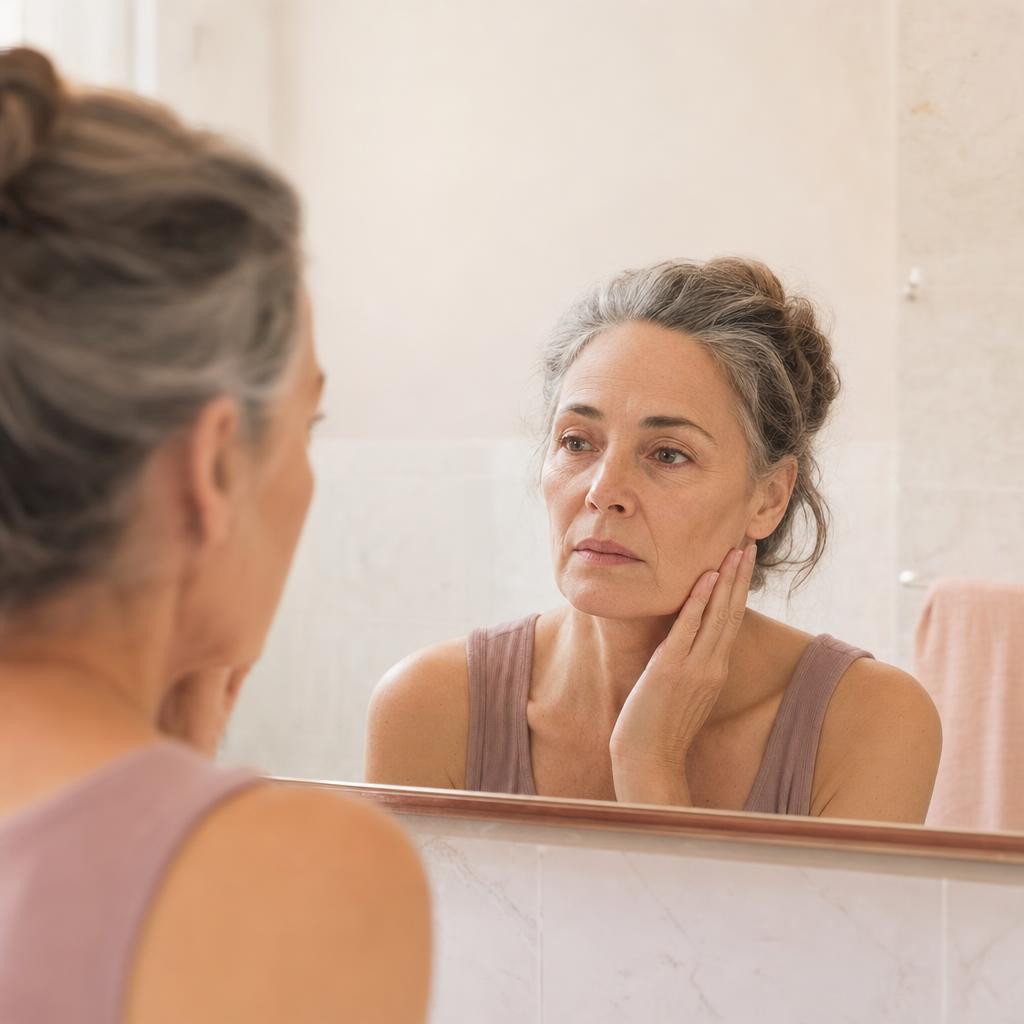
The short answer
It is real, and it is not your imagination. When you lose weight, your face loses some of the fat that held its shape from underneath. Research shows the midface loses about 7% of its volume for every 10 kg (22 lbs) of weight lost. At 50, skin has less spring, so it does not shrink back over the smaller shape the way it once would. In other words: the weight left, but the skin it lived in is still catching up. Some of this recovers on its own. Some responds to care. What helps depends on which one you are looking at.How much of this can your face recover?
What actually happened to your face
Your face kept its shape because of small pads of fat that sit under the skin, in the cheeks, the temples and around the eyes. They work like the padding in a good sofa cushion. When you lose weight, you do not get to choose where it comes from, and these pads shrink with the rest of you.
In clinical research, people lost about 7% of their midface volume for every 10 kg (22 lbs) of body weight they lost. Most of it came from the pads closest to the surface: the cheeks, the temples and under the eyes. That is why the first places you noticed it were probably exactly there.
Here is the picture that makes it click. Imagine a favorite sweater that spent years stretched over a fuller frame. Wash it, lay it flat, and it never quite returns to the size on the label. Now imagine the cushion it was resting on has also lost some of its filling, so the fabric settles into soft folds where it used to sit smooth. Your face after weight loss is both of those things at once:
- The skin above the pads did not shrink at the same speed. Skin that spent years over a fuller face has been gently stretched. At 30 it snaps back fast. At 50 there is less collagen and elastin, so it takes longer and does not always go all the way.
- The deeper folds got deeper. The lines from your nose to your mouth, and along the jaw, are creases that the cheek fat used to push outward from behind. Less padding behind them means more shadow in them.
Will my face recover on its own?
Partly. Some of the change reverses on its own, some responds to care, and some stays. Here is the honest breakdown:
The factors that made it worse are also the ones you can still influence: very fast loss, low protein, dehydration and sun exposure all show up in the research as things that deepen the effect. If you are still losing weight, a slower pace gives your skin time to adapt. Of everything on that list, it is the factor with the biggest influence that is still in your hands.
What you can actually do, starting today
- Stabilize before you judge. Your face keeps adjusting for months after your weight stops changing. The person in the mirror at month 2 is not the finished result.
- Protein, every day. Skin is built from it. Aim for a palm-sized portion at each meal; it is the cheapest skin treatment that exists.
- Hydration and SPF, daily. Dehydrated skin sits deeper into every hollow. Sun exposure breaks down the collagen you are trying to rebuild.
- Start retinol for the skin itself. It will not refill your cheeks, but it reliably improves what the skin itself looks like: texture, fine lines, radiance. At 50 you start it gently, and we wrote the full week-by-week guide: Is It Too Late to Start Retinol at 50?
- Give it a season, not a weekend. Photograph yourself monthly in the same light. Faces recover on a timescale mirrors are terrible at showing.
And the honest scope, as always: no cream restores lost facial volume. Anyone selling you one is selling. Volume decisions (fillers, fat transfer) are real options some women choose, but they are consultations with a qualified doctor, not shopping carts, and waiting until your weight is stable makes any decision better.
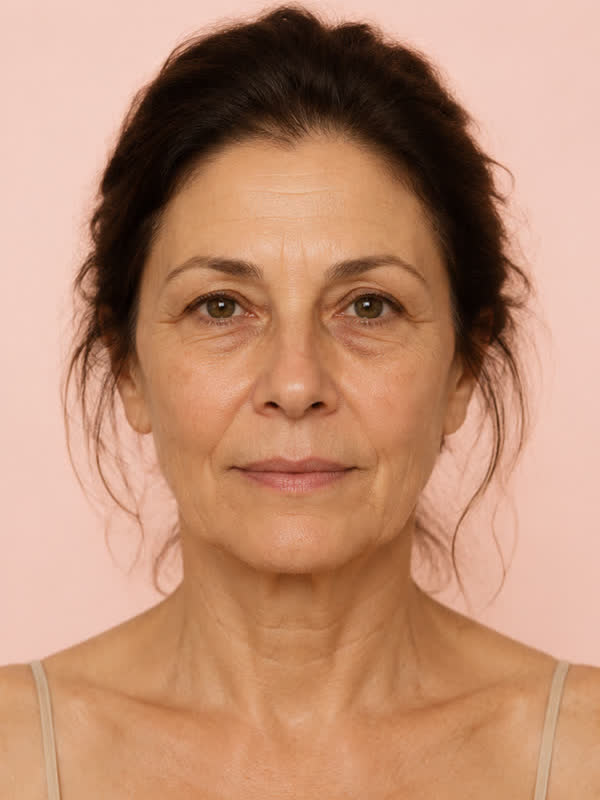 TODAY
TODAY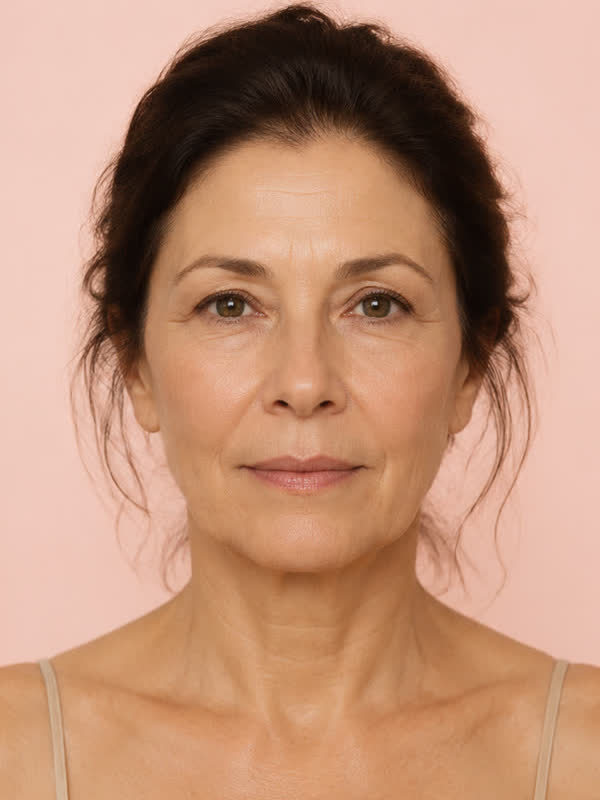 ATTAINABLE
The next step
Get Your Personalized Skincare Program
Revu starts with one photo. You get a program built for your face, not a generic routine: a realistic picture of what your skin can be, and a daily plan made just for you, one area at a time.
Download on theApp StoreFor iPhone · Made for women 40+
Frequently asked questions
Will my face go back to normal after weight loss?
Partly. Water balance and some fullness return over 6 to 12 months at a stable weight, and skin keeps settling slowly, more slowly at 50 than at 30. Deep folds and clearly loose skin tend to stay without intervention.
Does "Ozempic face" go away?
The facial changes from GLP-1 weight loss follow the same mechanism as any fast weight loss: deflated fat pads plus stretched skin. The recoverable part recovers the same way: stable weight, time, protein and consistent skin care.
How long does it take for skin to tighten after weight loss?
Most settling happens in the first 6 to 12 months at a stable weight. Age, how long the skin was stretched, sun history and genetics set the ceiling.
Can I avoid an aging face while losing weight?
You can reduce it: lose slowly (about 0.5 to 1 kg a week), keep protein high, hydrate, wear SPF daily, and start caring for your skin before you reach your goal weight, not after.
Why do my neck and jawline look worse than my cheeks?
The neck has the thinnest skin and the least underlying support, so slack shows there first. It responds to the same care, just more slowly.
Does losing weight cause wrinkles?
It deepens the folds that fat used to push out from behind, and hollowness casts shadows that read as aging. Surface wrinkles themselves are more about sun, time and skin quality, which you can work on.
Is it better to stay heavier to keep my face young?
No. The health case for a healthy weight beats the cosmetic case against it, and much of the facial change softens with time. The real lesson is about pace, not destination.
I am 55. Is it worse for me than for someone at 35?
The volume loss is similar, but the settling is slower because collagen and elastin decline with age. That makes the things you control (pace, protein, SPF, retinol) matter more, not less.
Could menopause be part of this too?
Often yes, and the two overlap. Menopause brings its own steep collagen loss and drier, thinner skin, which makes weight-loss changes land harder. See what menopause does to your skin.