What Menopause Does to Your Skin

The short answer
Your skin changed because your hormones did. In the first five years after menopause, skin loses up to 30% of its collagen. This is not a slow slide either. Think of it like a cliff, and it happens whether you moisturize or not. In other words: the rules that worked at 40 stopped applying, and nobody told you. What follows is what is actually happening, and what still works.Where are you in this?
What actually happens
Estrogen does more for your skin than anyone tells you. It helps skin hold water, keeps oil production steady, and supports the collagen that keeps skin firm. When estrogen falls, all three change at once, which is why this feels like several unrelated problems arriving together. They are one problem with several faces.
The number worth knowing: in the first five years after menopause, skin loses up to 30% of its collagen. After that the loss settles to roughly 2% a year. Most of the change you are seeing happened inside a short window, which is exactly why it felt so sudden.

MENOPAUSE SKINCARE GUIDE
The collagen cliff
This is the part nobody explains. The drop is real, it is measurable, and it is not about willpower.
revu-blueprint.com
Three things follow from that, and they are what you are actually noticing:
- Skin gets drier and thinner. Less estrogen means less of the natural moisture-holding substance in skin, so it loses water faster and feels tight by mid-afternoon. Thinner skin also bruises more easily and takes longer to settle after any irritation.
- Breakouts can arrive for the first time in decades. As estrogen falls, the balance with other hormones shifts, and skin can behave the way it did at seventeen, except now on the chin and jawline rather than the forehead.
- Firmness goes before wrinkles do. Collagen is structure. When it thins, the face reads softer along the jaw and neck first, which people often describe as looking tired rather than looking older.
And one that is rarely mentioned out loud: itching, or a crawling sensation on the skin. It is common, it is hormonal, and it is not in your head.
What helps, in order
Most menopause skin advice hands you a list of ten problems and ten fixes. That is how people end up doing nothing. The order matters more than the list.
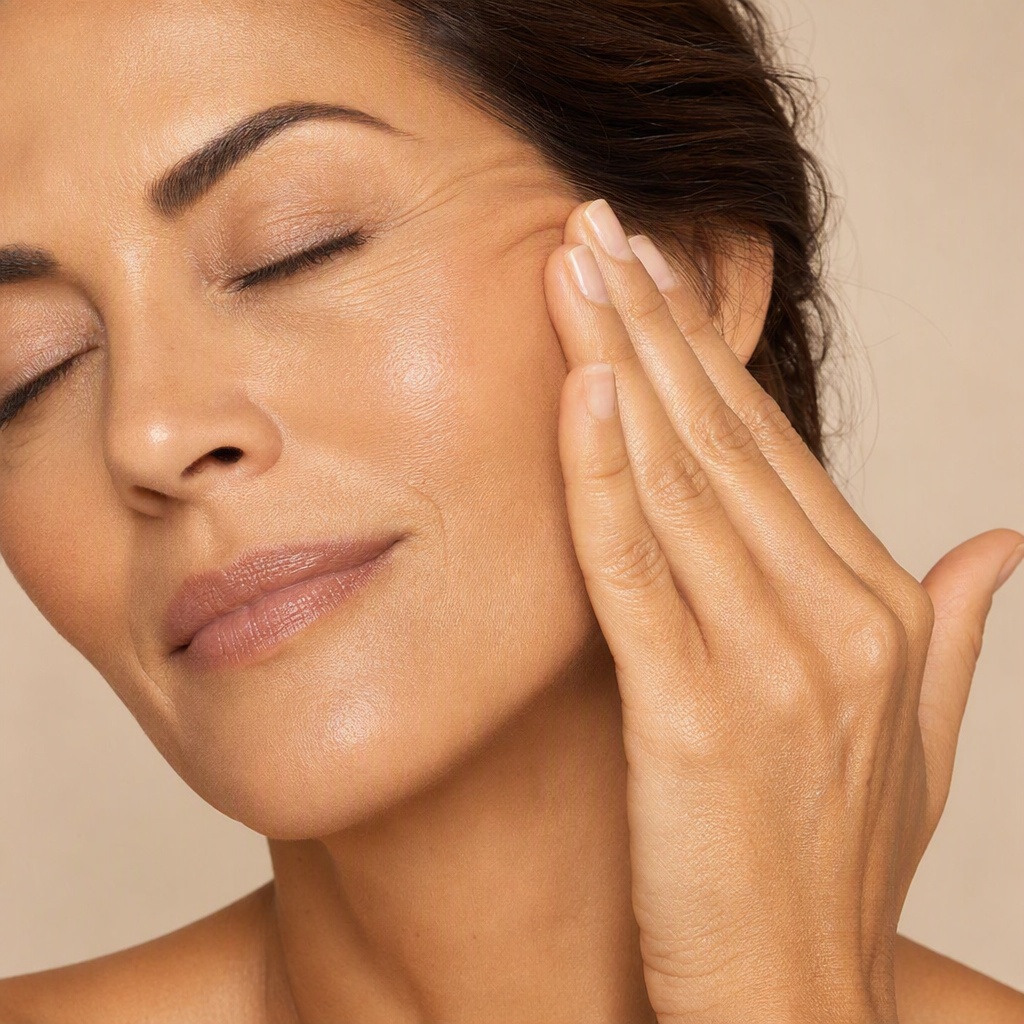
MENOPAUSE SKINCARE GUIDE
What to fix first
- 1BarrierGentle cleanser, a richer moisturizer, and stop anything that stings. Weeks, not months, to feel it.
- 2ProtectionSPF 30+ every morning. Sun exposure speeds up exactly the collagen loss already underway.
- 3Collagen supportRetinol, started low and slow, once the barrier holds. The strongest evidence of the three.
The order matters more than the list. Most routines fail because everything starts at once.
revu-blueprint.com
The honest scope, as always: skincare works on skin. It improves texture, tone, hydration, fine lines and firmness at the surface. It does not replace estrogen and it does not lift structural sagging. Hormone therapy has real evidence behind it, and it is a decision that should be discussed with a licensed medical professional who knows your history.
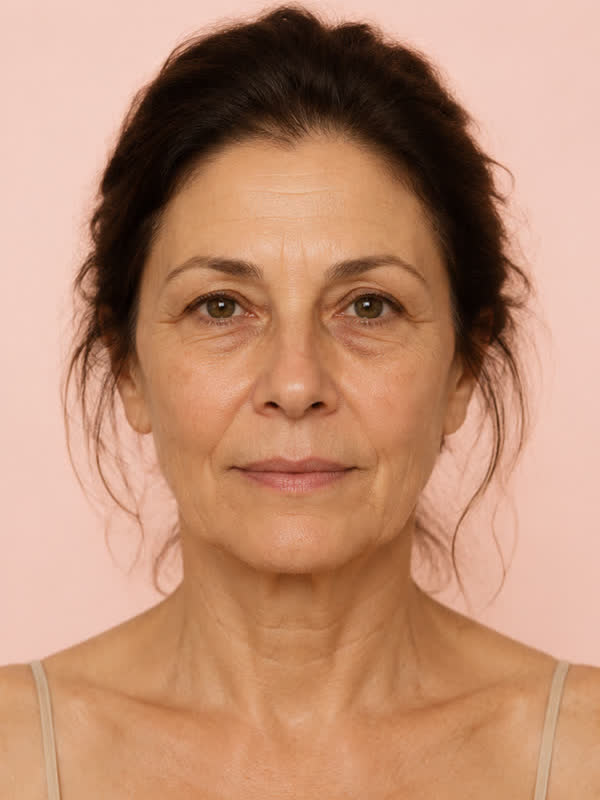 TODAY
TODAY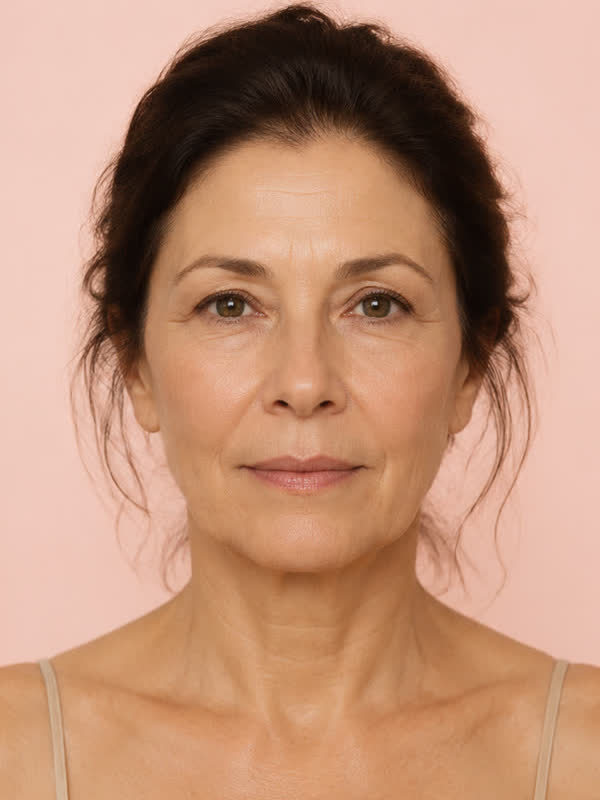 ATTAINABLE
The next step
Get Your Personalized Skincare Program
Revu starts with one photo. You get a program built for your face, not a generic routine: a realistic picture of what your skin can be, and a daily plan made just for you, one area at a time.
Download on theApp StoreFor iPhone · Made for women 40+
Frequently asked questions
Does menopause cause dry skin?
Yes, and it is one of the most common changes. Lower estrogen means skin holds less water, so it loses moisture faster and feels tight. A richer moisturizer and a gentler cleanser usually make a visible difference within a few weeks.
Why am I breaking out at 50?
Falling estrogen changes the balance with other hormones, which can push oil glands to behave as they did in your teens. Menopausal breakouts cluster on the chin, jawline and neck, and they respond badly to harsh teenage acne products that strip an already fragile barrier.
Does menopause cause itchy skin?
It can, including a crawling or prickling feeling with nothing visible on the skin. It is linked to the same hormonal shift and to skin holding less water. It is common, and worth mentioning to your doctor if it is severe or keeping you awake.
How much collagen do you lose in menopause?
Up to 30% in the first five years after menopause, then roughly 2% a year after that. It is the steepest change your skin will go through.
Can collagen supplements replace what menopause takes?
The evidence for drinking or swallowing collagen is far weaker than the evidence for retinol and daily sun protection. If you want to spend on one thing, spend it on the two that are well studied.
Will HRT help my skin?
Some research shows skin benefits from hormone therapy, but it is prescribed for menopause symptoms and health reasons, never as a skincare product, and it carries a real risk profile. That decision belongs with your doctor.
Is it too late to start retinol during menopause?
No. Skin stays responsive at every age, and the collagen window is exactly when retinol earns its place. Start low and slow, especially if your skin has become more sensitive.
Why does my skin sting now when it never used to?
A thinner, drier barrier is more reactive. It usually means the barrier needs rebuilding before actives go back in, not that you have suddenly become allergic to something.