Why Does My Neck Look Older Than My Face?

The short answer
Because it is not the same skin, and it never was. The skin on your neck is thinner, has far fewer oil glands, and folds thousands of times a day, every time you move your head. It also gets skipped. Most routines stop at the jaw and most sunscreen stops even higher. So the neck ages faster than the face, and then shows the difference all at once. Most of it responds to the same things your face responds to. You just have to actually put them there.Why neck skin is different
Three things separate the skin on your neck from the skin on your cheek. It is thinner, so every change shows sooner. It has far fewer oil glands, so it runs dry by default and holds moisture badly. And it moves constantly. Every nod, every look down at a phone or a book, folds it along the same lines.
Add the practical part: for most of us, decades of face cream, sunscreen and attention ended at the jawline. The neck got sun without protection and dryness without moisture. The difference you see in the mirror is mostly the difference in treatment, compounded over years.

NECK SKINCARE GUIDE
The three things you are actually seeing
- 1Horizontal linesThe creases that run across the front. Made by movement and posture, deepened by lost collagen. They respond slowest, but they do respond.
- 2Vertical bandsTwo soft ropes down the front that appear with age. They are muscle, not skin, which is why no cream reaches them.
- 3Crepey textureThin, finely wrinkled, tissue-paper skin. This is dryness plus sun plus thinner skin, and it is the one that improves most.
Naming which one bothers you matters, because they have different causes and different answers.
revu-blueprint.com
What have you noticed with your neck?
Why it feels like it happened suddenly
It did not. Thin skin holds a change invisibly for a long time, and then several changes cross the visible line together. A little more sun damage, a little less collagen, a slightly different posture at a screen, and one day the mirror seems to have jumped. The change was gradual. Noticing it was not.
Weight loss can do the same thing faster. Volume under the skin was quietly smoothing it, and when the volume goes, the laxity that was already there shows at once. If that is your version of this, our guide to why the face looks older after weight loss covers what recovers on its own.
Do you actually need a neck cream?
Mostly, no. Look at the ingredients on a neck cream and you will find the same actives as a face product, usually at a gentler strength, usually at a higher price per tube. There is nothing about neck skin that requires a separate product category.
What neck skin does require is a gentler schedule. It is thinner and it complains sooner, so the retinol your face takes three nights a week might be a one-night-a-week product below the jaw. The product is the same. The dose is not.
If a separate jar on the shelf is what reminds you to do it at all, that is a real reason to own one. Just know that is what you are buying: the reminder, not the chemistry.
What actually helps

NECK SKINCARE GUIDE
What to do, in order
- 1Sunscreen to the collarboneEvery morning your face gets SPF, your neck gets it too. Sun is the single biggest reason neck skin looks older.
- 2Moisturize past the jawFewer oil glands means neck skin runs drier by default. The cream you already own, carried lower, twice a day.
- 3Retinol, gentlySame product as your face, half the frequency. Neck skin is thinner and complains sooner, so start one night a week.
No new products. The whole fix is applying what you already use a few inches lower.
revu-blueprint.com
The honest scope, as always. Skincare improves the surface: texture, dryness, crepiness, and over time the shallow lines. The two vertical bands are muscle and no cream reaches them. Deeper laxity is structural. Those are conversations with a dermatologist, and a good one will tell you the same before selling you anything.
 TODAY
TODAY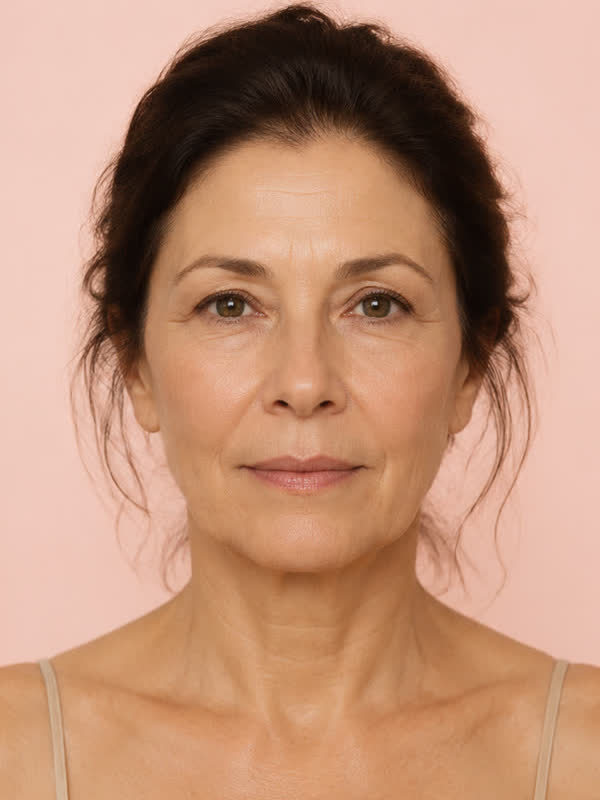 ATTAINABLE
The next step
Get Your Personalized Skincare Program
Revu starts with one photo. You get a program built for your face, not a generic routine: a realistic picture of what your skin can be, and a daily plan made just for you, one area at a time.
Download on theApp StoreFor iPhone · Made for women 40+
Frequently asked questions
Can I use retinol on my neck?
Yes, and it is one of the best-evidenced things you can do there. Use the same product as your face at half the frequency, starting one night a week, on dry skin. Neck skin is thinner and gets irritated sooner, so slower is the whole strategy.
Why does my neck look so old all of a sudden?
Thin skin hides gradual change until several changes cross the visible line together. Years of skipped sunscreen and moisturizer surface at once, which feels sudden even though it was not. Weight loss can also reveal laxity that volume was smoothing over.
My neck looks old. What can I do?
Start with the unglamorous pair: sunscreen down to the collarbone every morning and moisturizer past the jaw twice a day. Add retinol gently after a few weeks. Texture and crepiness respond well. Muscle bands and deep laxity are a dermatologist conversation.
Do neck creams actually work?
They work about as well as the equivalent face product, because they are usually the same ingredients in a smaller, pricier tube. What matters is putting sunscreen, moisturizer and retinol on the neck at all, not which jar they come from.
What does an aging neck look like?
Three patterns, usually mixed: horizontal lines across the front, two soft vertical bands, and crepey tissue-paper texture. They have different causes, which is why one product never fixes all three.
Can you fix neck lines without surgery?
Shallow lines and texture improve with daily SPF, moisturizer and slow retinol, over months. The vertical bands are muscle and the deeper laxity is structural, and being honest about that line is exactly what a trustworthy plan looks like.
Why is the skin on my neck thinner?
It simply is built that way: less collagen-dense than the cheek, with fewer oil glands. That is why it dries faster, wrinkles sooner and reacts more strongly to actives than your face does.
Should sunscreen go on my neck every day?
Yes, down to the collarbone, every morning you put it on your face. Sun exposure is the biggest single contributor to the crepey texture people dislike most, and the neck usually got decades less protection than the face.